Alhambra Archways: Moorish Architecture in Granada
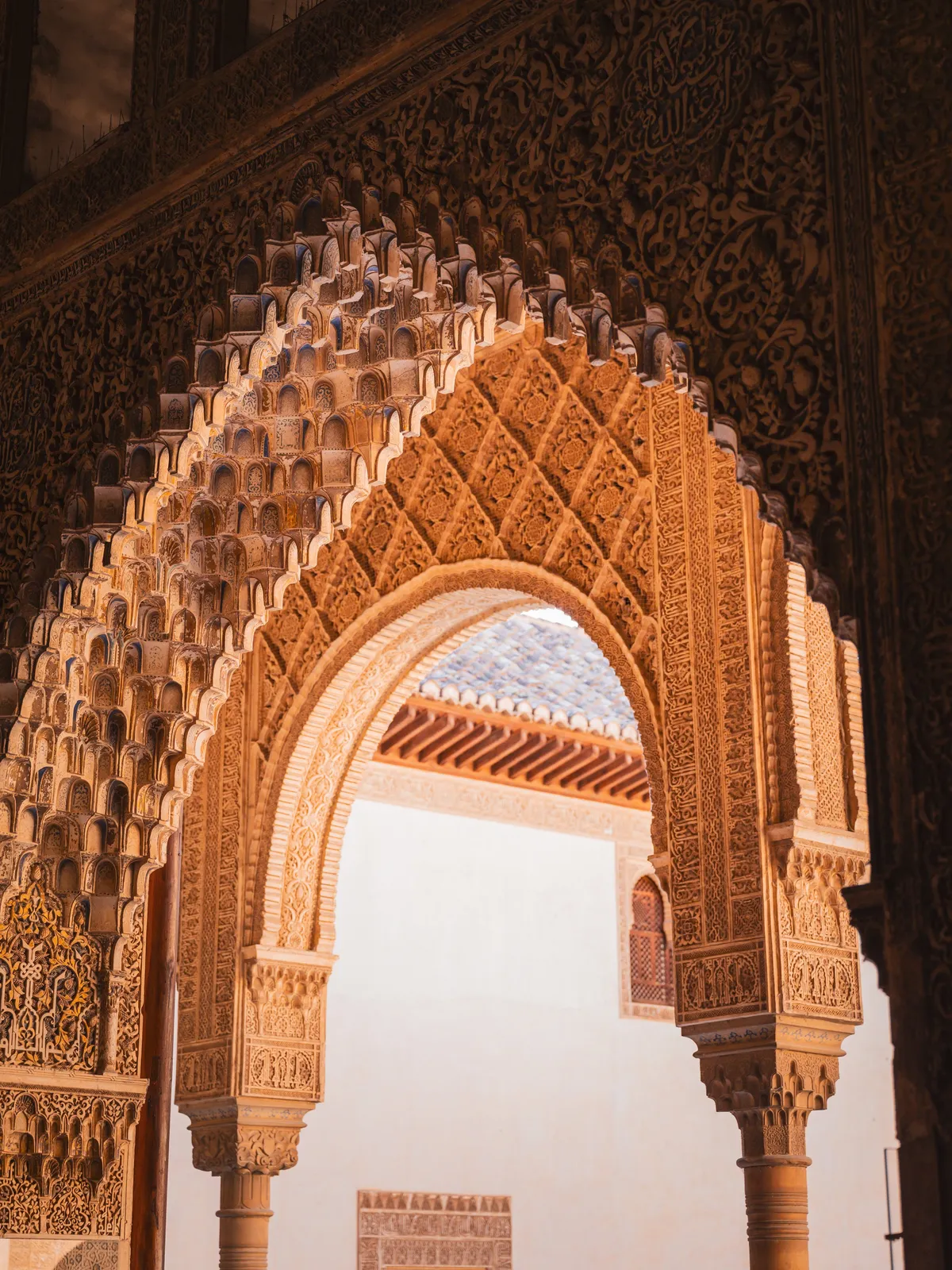
Stand under one of the archways in the Alhambra and it’s hard to look away. Every surface is worked, horseshoe arches stacked with honeycombed plaster, walls carved into lace-like geometric patterns and flowing Arabic script, all of it glowing when the afternoon light rakes across it. This is Moorish architecture at its absolute peak, and it’s the reason I made my Alhambra archway print. If you love this style, or you’re planning a trip to Granada, here’s what you’re actually looking at and how to see it for yourself.
What the Alhambra is
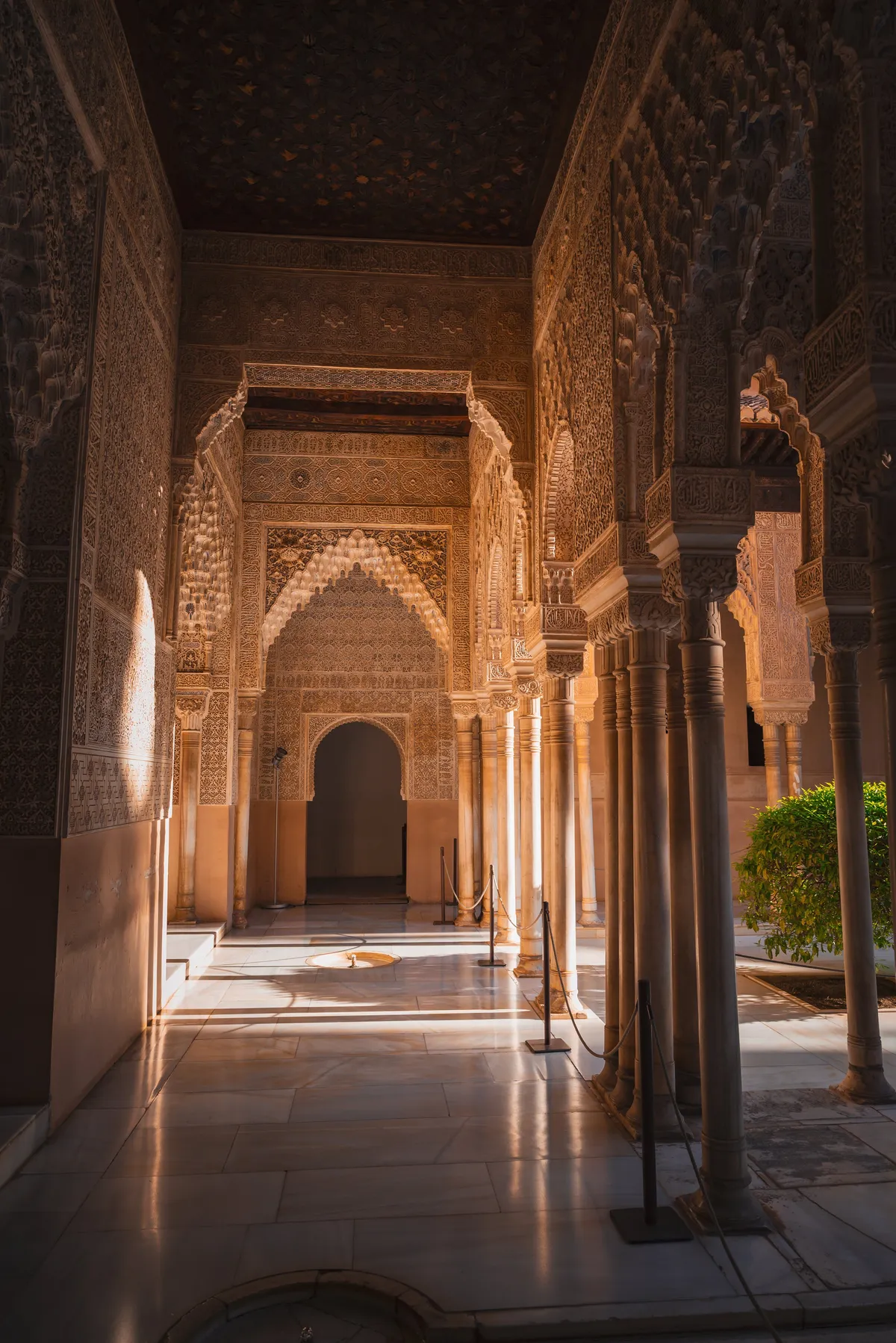
The Alhambra is a hilltop palace and fortress complex in Granada, in the Andalusia region of southern Spain. It was built largely in the 13th and 14th centuries by the Nasrid dynasty, the last Muslim rulers of the Iberian Peninsula, and it’s the finest surviving example of Moorish architecture anywhere in the world.
The complex has a few distinct parts, but the one everyone comes for is the Nasrid Palaces, the ornate royal residences where those famous archways, courtyards, and carved rooms are. This is where the archway in my print lives. Alongside it you’ve got the Generalife (the summer gardens), the Alcazaba (the older military fortress), and the grounds that tie it all together.
Why Moorish architecture looks the way it does
If you’ve ever wondered why these spaces feel so different from a European cathedral, it comes down to the design language of Islamic art. Instead of statues and figurative imagery, Moorish architecture builds its beauty out of three things: geometry (interlocking star and tile patterns that repeat endlessly), arabesque (stylized, flowing plant and vine motifs), and calligraphy (Arabic script carved right into the walls, often poetry and blessings).
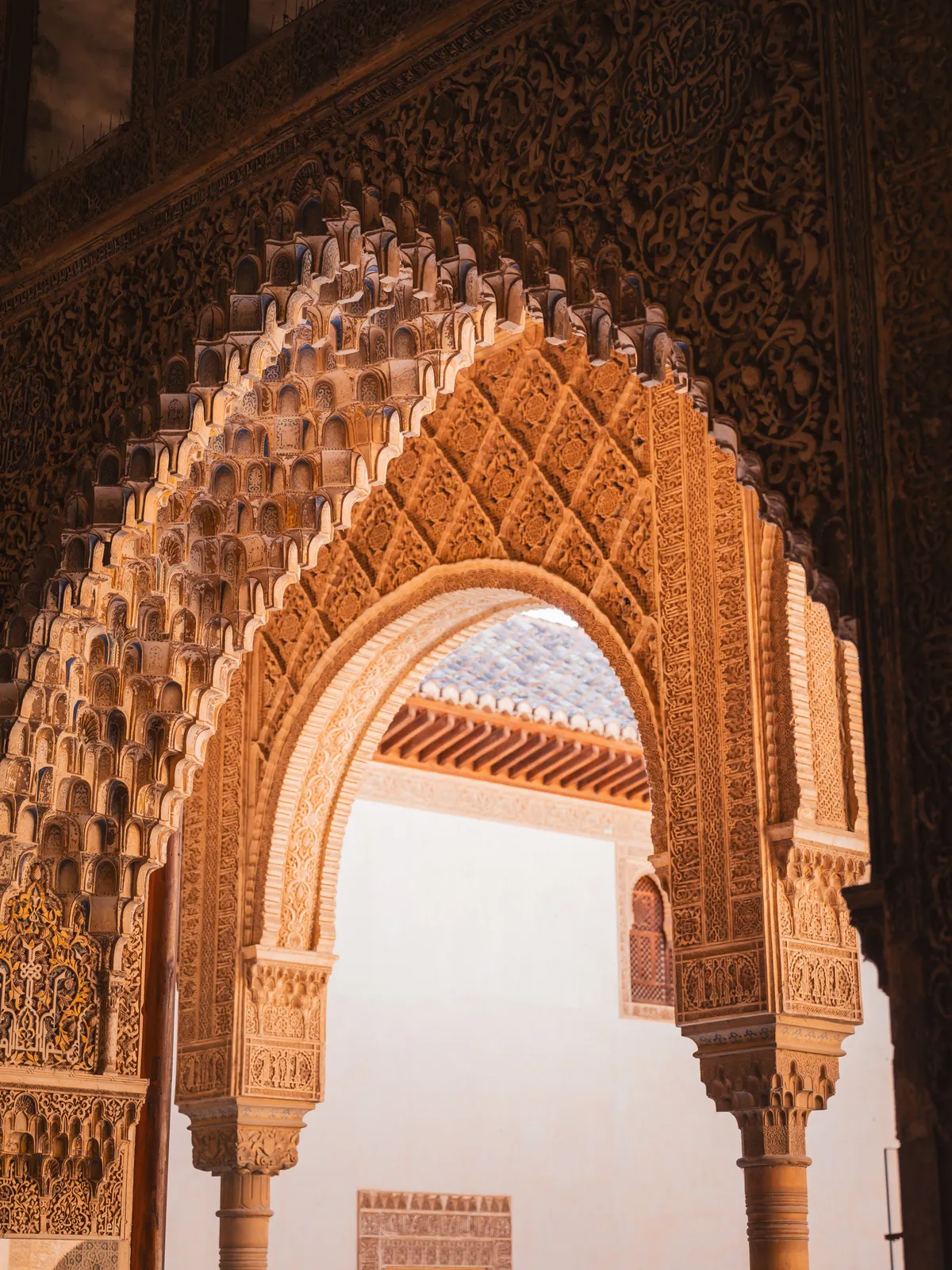
The archways themselves are a signature. You’ll see horseshoe arches and delicately scalloped shapes, and above them, muqarnas, those honeycomb or stalactite-like clusters of tiny niches that catch light and shadow. Nothing is left plain. The whole effect is meant to feel infinite and meditative, and in person it genuinely does.
It’s worth clearing up one thing travelers mix up: the Alhambra is Spanish, but its style is Moorish, the Islamic architecture of Al-Andalus and North Africa. It shares deep roots with the architecture you’d see in Morocco (which is why they feel related), but the Alhambra itself sits in Granada, Spain.
How to see it: tickets and timing
The single most important thing to know: entry to the Nasrid Palaces is by timed ticket, and it sells out, often days or weeks ahead. Don’t show up expecting to walk in. Book online in advance, and you’ll pick a specific half-hour entry slot for the palaces (the rest of the grounds are more flexible).
A few tips from shooting there:
-
Go early or late. Midday brings the biggest crowds and the harshest light. The first entry slots of the morning and the last of the afternoon give you softer light and thinner crowds for both photos and just being present.
-
Bring a wide lens and a longer one. Wide for the courtyards and full archways, longer to isolate the carved detail and the muqarnas overhead.
-
Look up. Most people photograph the courtyards at eye level and miss the ceilings, which are often the most extraordinary part of the room.
-
Be patient for a clean frame. The palaces are busy. Wait a beat and a gap in the crowd will open up.
Make it a day in Granada
Granada is a gem beyond the Alhambra, so give it time. Wander up into the Albaicín, the old Moorish quarter of steep whitewashed lanes, and climb to the Mirador de San Nicolás for the classic view of the Alhambra glowing against the Sierra Nevada at sunset. Granada is also famous for still serving a free tapa with every drink, one of the best food traditions in Spain, so eating your way through the old town costs almost nothing.
Take the archway home
If this style speaks to you, this is that archway, the carved detail, the arches, the warm Andalusian light, available as a print for your wall:
Alhambra Archway Print, Moorish Architecture →
It comes in sizes from a small 5x7 up to a 24x36 statement piece, printed on demand on matte or lustre paper, unframed with free shipping. Moorish and Islamic geometry has a calm, timeless quality that anchors a room, it works beautifully in an entryway, an office, or anywhere you want a bit of that old-world craftsmanship on the wall.
I’m a travel and landscape photographer based in Portland, and places like the Alhambra, where the light and the craftsmanship do all the work, are exactly what I chase. If you make it to Granada, I hope you get to stand under those arches yourself.