Hokokuji: Kamakura's Bamboo Forest and the Quiet Alternative to Arashiyama
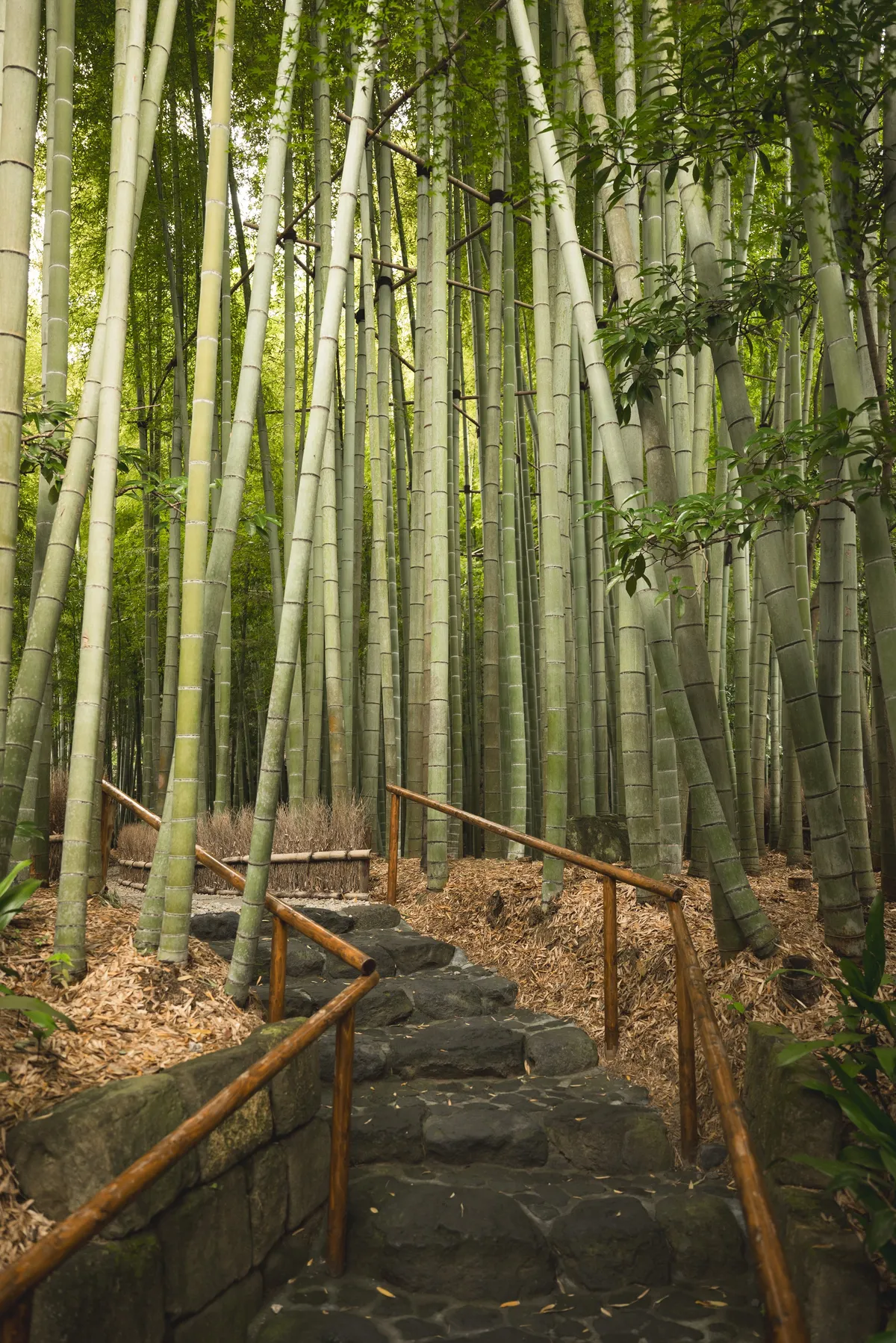
When people picture Japan’s famous bamboo forest, they’re usually picturing Arashiyama, the towering grove on the edge of Kyoto that shows up on every travel feed. It’s stunning, and it’s also mobbed; on a normal afternoon you’re sharing that path with hundreds of other people trying to get the same empty photo. There’s a quieter one. Tucked behind a small Zen temple in Kamakura, an hour south of Tokyo, the Hokokuji bamboo grove gives you the same soaring green cathedral with a fraction of the crowd. That’s where I made my Japanese bamboo forest print, and if you’re anywhere near Tokyo, it’s the version I’d send you to.
What Hokokuji is
Hokokuji is a small Rinzai Zen temple in the hills east of central Kamakura, founded in the 1300s. Almost everyone just calls it the “Bamboo Temple” (Takedera), because behind the main hall the grounds open into a grove of around two thousand towering moso bamboo stalks, with a single stone path winding through them.
It’s an intentionally contemplative place. The temple has kept it calm and uncommercial, you pay a small entry fee, walk the path slowly, and at the back of the grove there’s a little open-air tea house where, for a bit extra, you can sit with a bowl of matcha and just look up into the bamboo. That combination, the height of the stalks, the filtered green light, the quiet, is the whole reason to come.
How to get there from Tokyo
Kamakura makes an easy day trip from Tokyo. Take the JR Yokosuka Line from Tokyo Station straight to Kamakura Station, it’s about an hour. From there, Hokokuji is on the east side of town: a short local bus ride (toward Kamakura-gu / Jomyoji) drops you a five-minute walk from the entrance, or it’s a roughly 30-minute walk if you’d rather see the town on the way.
Because it’s a day trip, you can pair it with the rest of Kamakura and make a full outing of it, more on that below.
When to go and how to shoot it
Go early. The temple opens in the morning, and the first hour after opening is when you’ll get the grove closest to empty and the light at its softest and most even. Midday sun punches hard shafts through the canopy that can blow out your highlights; overcast days and early mornings give you that smooth, glowing green that makes bamboo photos work.
A few notes from shooting it:
-
Shoot vertical. Bamboo is all about height. Turning the camera portrait and pointing slightly up the stalks emphasizes just how tall they are.
-
Slow down for the light. Under the canopy it’s dimmer than it looks. A steady hand or a small tripod lets you drop your shutter speed and keep everything sharp.
-
Look for the path. The winding stone walkway gives your composition a line to follow into the grove, it’s what turns a wall of bamboo into an actual photograph.
-
Then put the camera down. Buy the matcha, sit in the tea house, and look up for a few minutes. It’s worth it, and you’ll see compositions you’d have walked past.
Make a day of it in Kamakura
Kamakura punches way above its size, so build the bamboo grove into a full day. Within a short bus or train ride you’ve got the Great Buddha of Kotoku-in (a 40-foot bronze figure sitting in the open air), the hillside temple and ocean views at Hase-dera, and the grand approach to Tsurugaoka Hachimangu shrine in the center of town. Start at Hokokuji early before the crowds, then work your way across the rest, it’s one of the best day trips you can take from Tokyo.
For lunch, my pick is Matsubara-an, a soba restaurant set in an old house with a garden. Hand-cut buckwheat noodles are the thing to get, and the quiet, wood-and-greenery setting is the perfect midday reset between temples. It’s a fitting way to slow down and eat something local without breaking the calm mood the grove puts you in.
Take the grove home
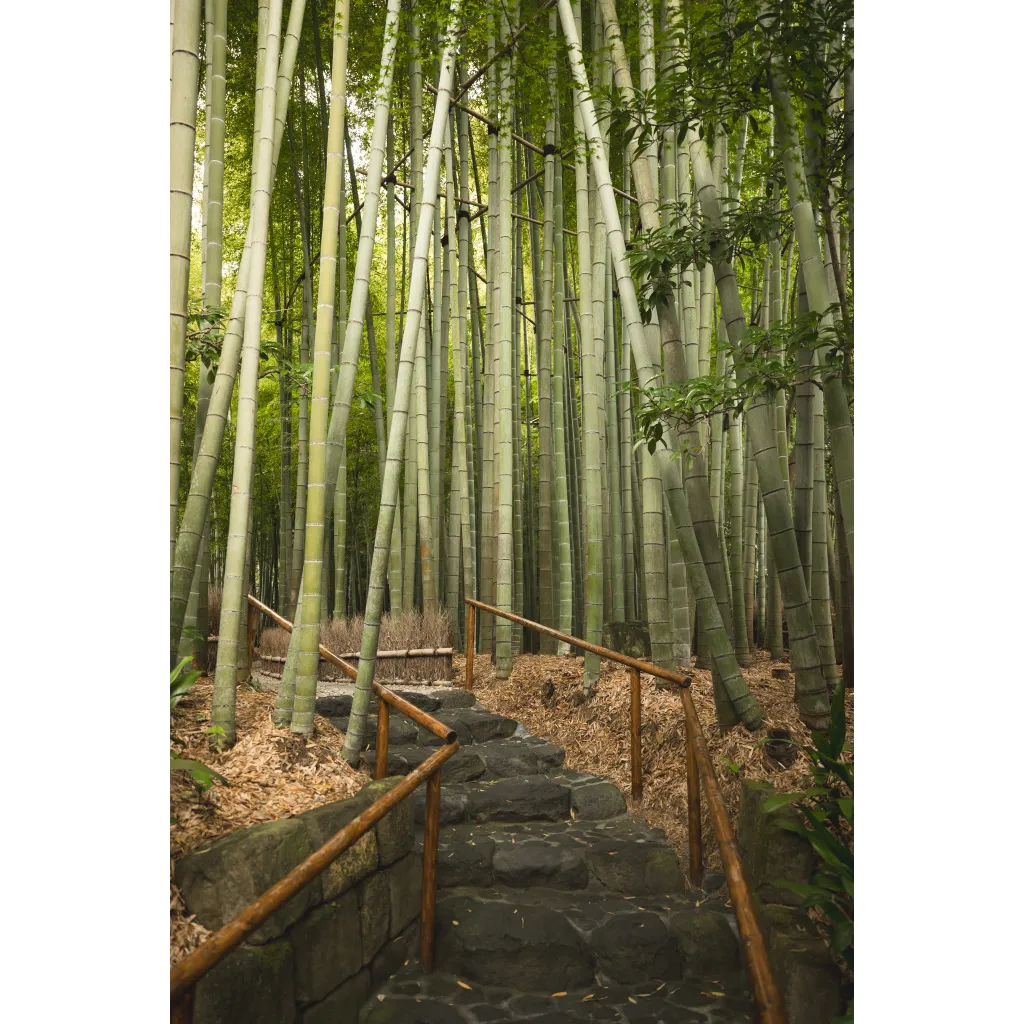
If you want that quiet green light on your wall without the flight, this is the frame from the Hokokuji path, towering stalks, the stone walkway, that stillness, available as a print:
Japanese Bamboo Forest Print, Hokokuji, Kamakura →
It comes in sizes from a small 5x7 up to a 24x36 statement piece, printed on demand on matte or lustre paper, unframed with free shipping. The calm, zen quality of it makes it an easy fit for a bedroom, a studio, or any corner of a home that could use a little more stillness.
I’m a landscape and cityscape photographer based in Portland, and Japan is one of the places I keep going back to shoot. If you make it to Hokokuji yourself, I’d love to see what you bring home.