Nikon FM2 Review: My First Real Film Camera
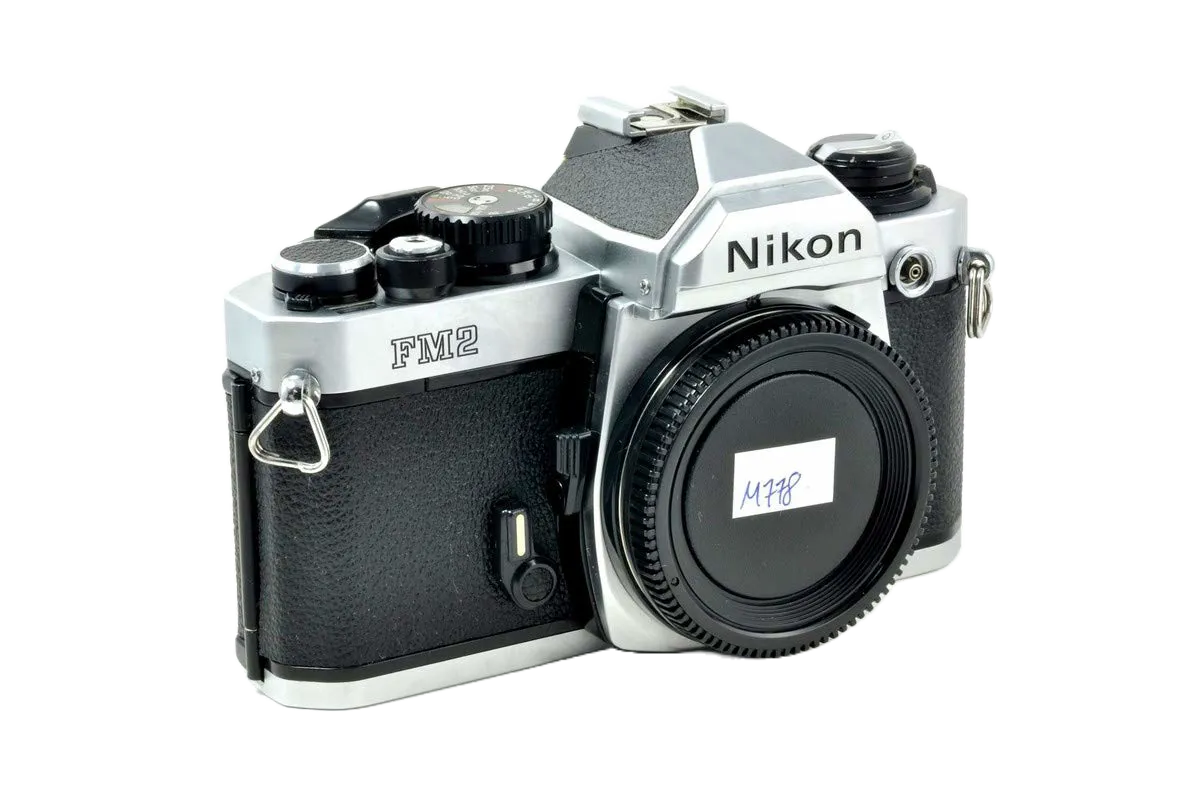
The Nikon FM2 is the first film camera I’ve really shot a ton with, and it’s been a solid SLR to learn on. If you’re thinking about getting into 35mm film, this is one of the cameras that keeps coming up for a reason. Here’s my honest take after putting a bunch of rolls through it, plus the specs and details worth knowing before you buy one.
Nikon FM2 specs at a glance
-
Introduced: 1982 (the updated FM2n arrived in 1984)
-
Type: 35mm SLR, fully mechanical
-
Shutter: Vertical-travel metal focal-plane shutter, 1 sec to 1/4000, plus Bulb
-
Flash sync: 1/200 (1/250 on the FM2n)
-
Film speed (ISO) range: ISO 12 to 6400
-
Metering: Center-weighted, with a simple +/o/− LED display in the viewfinder
-
Batteries: Two small cells power the light meter only, the camera fires without them
-
Body weight: ~540g (about 1.2 lbs) for the body
That last point is worth clarifying, because “how much does the FM2 weigh” is a common question. The body on its own is about 540 grams. Mount a lens and a strap, and you’re up around 2 lbs in the hand, which is what it feels like in real use, solid and reassuring, not delicate.
Why film cameras are easier to learn on than you’d think
The biggest surprise for me was how much simpler film is by nature. It’s just the core features of a camera, no menus. The preset shutter speeds, you physically click the dial to 1/125, 1/250, 1/500 and so on, actually make choosing your exposure easier, not harder. You’re picking from a handful of clear options instead of scrolling a digital dial through a hundred in-between values.
The FM2 strips it down to the three things that actually matter: shutter speed, aperture, and focus. That constraint made me a better photographer faster.
The built-in light meter
The light meter is about as simple as it gets. Look through the viewfinder, and you get three LEDs: a + (overexposed), an o (spot on), and a − (underexposed). You adjust your shutter speed or aperture until the o lights up, and you’re good. A combination of (o+) is the sweet spot between correctly exposed and overexposed, which can be great if you are shooting a film that loves light. For a mechanical camera from the early ’80s, it’s genuinely intuitive, and it’s the thing I rely on most every time I shoot.
Setting the ISO dial
The ISO dial is just as easy, lift and turn it to match whatever film you’ve loaded. This is also where you can get creative. When I’m shooting a roll like CineStill 400D or Portra 400, I tend to set the dial to 200 ISO instead of the box speed of 400. Rating the film slower like that overexposes it about a stop, which for color negative film gives you fuller shadows and that soft, filmic look people love. (Whether you should shoot at box speed or overexpose is a whole topic on its own, more on that in a future post.)
Loading film: don’t make my mistake
Here’s the single biggest difference between film and digital, and the one that bit me: you have to physically load the roll yourself, and you have to make sure it’s actually caught on the take-up spool.
I had two rolls come back completely blank because the film hadn’t wrapped fully around the spool, so it never advanced, and I was just clicking the shutter on nothing. Classic beginner mistake. The fix is simple: after you thread the leader in and advance a couple of frames, watch that the rewind knob on the top-left turns as you wind. If it’s turning, the film is moving. If it’s not, re-seat it before you close the back. That five-second check saves you a whole roll.
Built like a tank, runs without batteries
The FM2 is heavier than a lot of digital cameras, but that weight comes from how it’s built. It’s incredibly durable, this is a metal-bodied, mechanical camera that could take a real drop and keep shooting. Your lens is the more fragile part, so protect that.
My favorite thing about it, though, is that it operates without batteries, the only thing the two cells power is the light meter. Everything else is mechanical. I didn’t want to worry about charging a camera, especially on longer trips, and with the FM2 I never have to. Even if the meter dies, I can keep shooting and meter another way.
And the 1/4000 top shutter speed is genuinely impressive for a mechanical camera of its era. It lets you shoot fast film or wide-open apertures in bright light without blowing everything out, a spec that plenty of cameras from that time couldn’t touch.
Is the Nikon FM2 worth it?
For me, yes. It’s simple enough to learn on, tough enough to travel with, and it doesn’t rely on a battery to work. If you want a mechanical 35mm SLR that teaches you the fundamentals and lasts decades, the FM2 is hard to beat.
If you want to pick one up, here’s the one I’d point you to:
Check the Nikon FM2 on Amazon →
As an Amazon Associate, I earn from qualifying purchases.