Sony A7C II Review: A Compact Full-Frame for Photo and Video
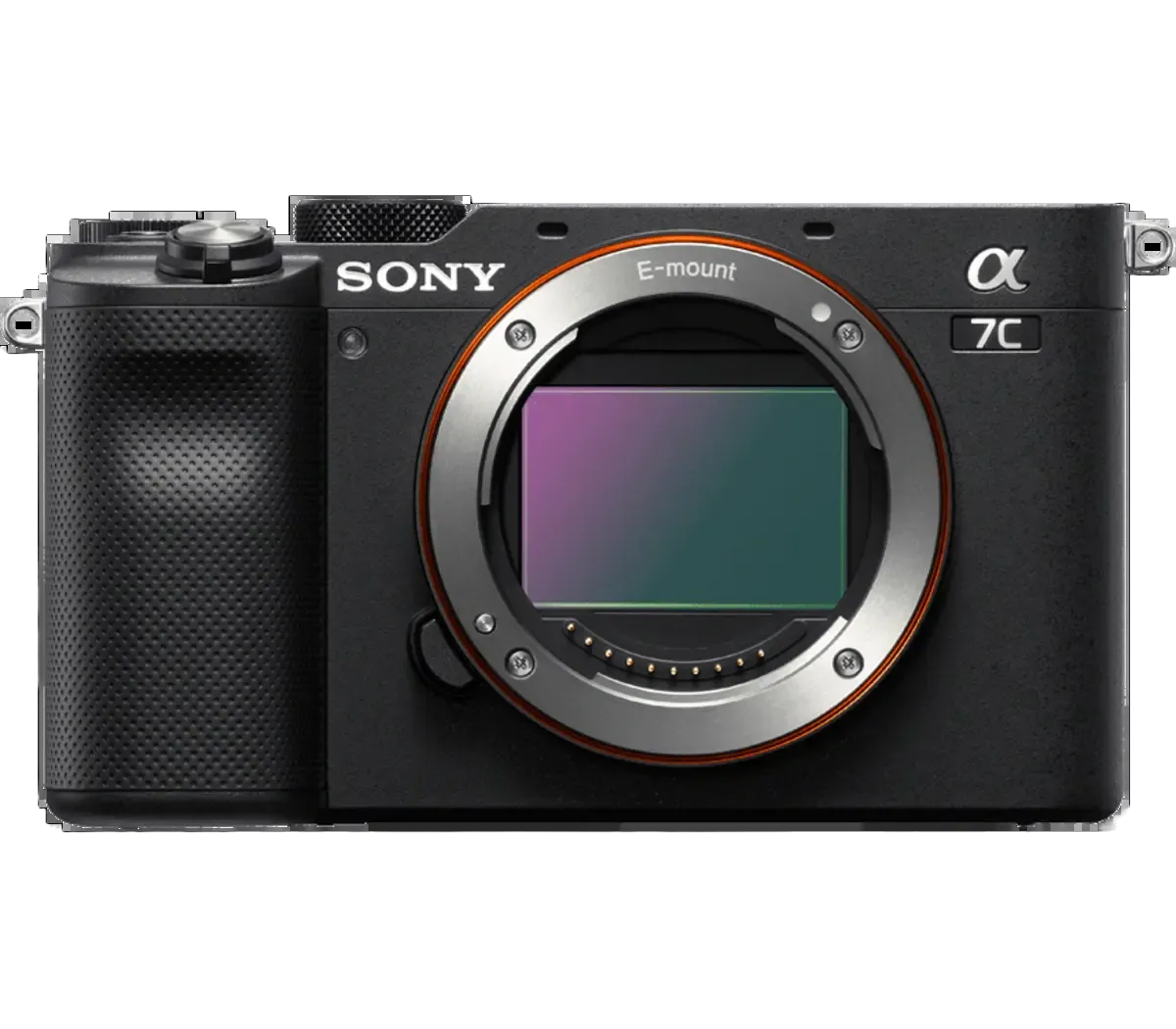
I picked up the Sony A7C II because I wanted one camera that could shoot photo and video at a high level, and it’s been that for me. I came to it from a Nikon Z5, which was a good camera but started holding me back once I got more serious about video. After living with the A7C II for a while, here’s my honest take, plus the specs worth knowing before you buy one.
Size and handling
The first thing you notice is how small and light it is. The body is about 514 grams, and I love that I can throw on a little 24mm prime, drop it in my shoulder bag, and forget it’s there. That’s most of the reason I bought it.
The tradeoff shows up with bigger lenses. When I put my Sigma 24-70 f/2.8 on it, the balance goes off. It gets top heavy and the weight isn’t evenly distributed, so it’s less comfortable to hold for a long time. That’s kind of the deal you make for a body this compact. With small primes it feels perfect. With big glass it fights you a little.
Autofocus
The autofocus is quick and sharp. You get 759 focus points and Sony’s Real-time Recognition AF, which locks onto people, animals, birds, and even cars and trains, with a dedicated AI chip in the camera doing that tracking. There’s a solid selection of AF modes, and which one you want really depends on the scene you’re in. The continuous autofocus is great for video, it just holds focus and tracks while you and your subject move.
There are a lot of settings, and that’s a warning
I’ll be real about this one. There are a LOT of settings on this camera, and it’s easy to get into the weeds with them instead of just shooting. Optimizing your settings for an hour is not going to give you a better photo.
Some of the tools are worth learning though. The zebras and metering modes are really useful for setting your exposure, especially for video, or just for making sure you’re not blowing out your highlights. The silent shutter is nice when you’re somewhere quiet and don’t want the click to bother anyone.
Video and S-Log
The S-Log capabilities are great, but I’ll say there’s a real learning curve, and I’m still working through it. S-Log3 gives you a flat profile with a ton of latitude to grade later, and it holds around 14 stops, but you have to know what you’re doing in post to make it look right. The camera shoots 4K up to 60p, and at 60p it crops into a Super35 area (about 1.5x), so keep that in mind if you shoot wide. It records 10-bit 4:2:2, and there’s S-Cinetone if you want a nice look straight out of camera without grading anything.
Coming from the Nikon Z5
My jump from the Z5 was mostly about wanting to do photo and video at a higher level in one body. The A7C II has a higher-resolution sensor, 33 megapixels versus the Z5’s 24, though both are full frame, so the sensor isn’t actually bigger, you just get more detail and more room to crop.
Here’s what I want to be clear about. Buying a nicer camera did not automatically make my photos better. A lot of the battle is getting comfortable with the settings and figuring out which modes you actually like to shoot. I’m on manual most of the time because it gives me the most control, but there’s a time and place for aperture priority or shutter priority, like when a moment is moving fast and you don’t have time to dial in everything yourself.
Phone and remote features
There are some remote features where you connect the camera to your phone or computer through Sony’s Creators’ App. You can pull your photos onto your phone wirelessly and shoot remotely from the app. I’ve never actually used them, but they do work, and if you post from your phone a lot it’s a quick way to get your shots off the camera without a cable or card reader.
Is it worth it?
I’m happy with it. It’s small enough that I actually bring it everywhere, it takes great photos, and it handles video well once you put in the time to learn it. If you want one compact body that does both and you’re willing to climb the settings learning curve, it’s a strong pick. Just know that if you shoot big heavy lenses most of the time, the small body won’t balance them as well as a bigger camera would.
Every long exposure in my teamLab Borderless post was shot handheld on this camera, if you want to see what it can do in near dark. And if you want to see where I started, my Nikon FM2 review covers the film camera I still shoot alongside it.
Shop the Sony a7cii here